

Moose is a nine-year-old Lab mix, about 74 pounds, with hip arthritis that showed up on his x-rays last spring. His vet and I talked through the usual options: fish oil, joint chews, keeping his weight steady, shorter but more frequent walks. We were doing all of it. It helped some. But the nights were still rough.
He had a basic dog bed. Decent size, polyfill stuffing, the kind that looks fine in the store and flattens into almost nothing within a few months. I had washed it so many times the fill had clumped in the corners. I knew it was not great, but I kept telling myself the real problem was his joints and a better bed probably would not change much. I was wrong about that.
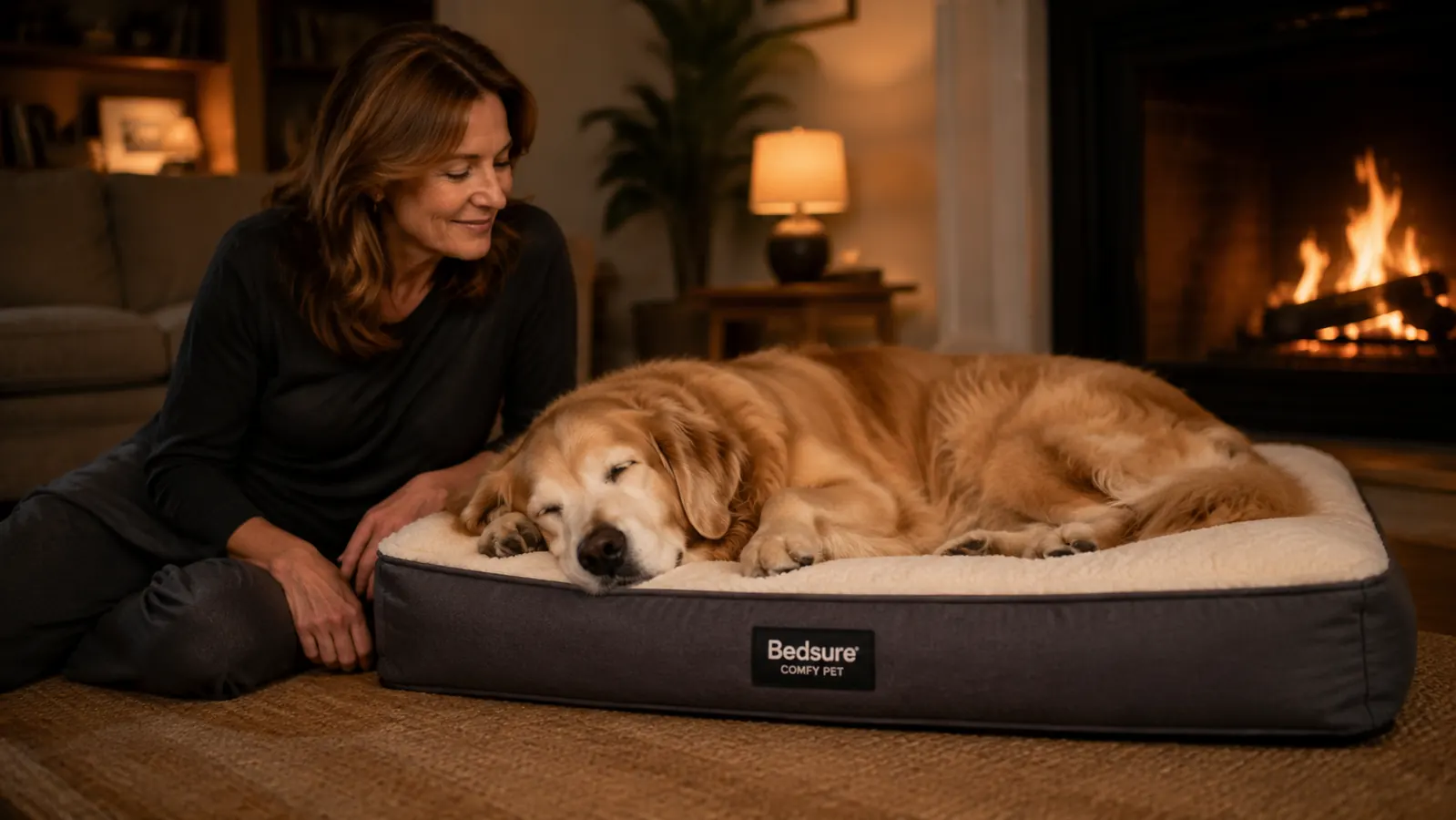
The first sign I noticed was not that Moose slept better. It was that I slept better. I was not getting up at 2am to let him out because he was restless and standing at my door. I was not hearing him shift and groan every hour on the hour. The first night on the new bed, he slept from about 10pm until just past 6am. I stood in the kitchen with my coffee thinking something was wrong because it was so quiet.
The bed I switched him to was the Bedsure orthopedic memory foam dog bed, the large size. It has a solid memory foam base, not polyfill, not shredded foam scraps, but a single dense block of memory foam that does not compress down to nothing under a 74-pound dog. The cover zips off for machine washing, which matters a lot to me because Moose has the kind of coat that migrates onto everything. I had read through the full review I did on it before buying, and the durability and washability were the two things that convinced me.
The first night on the new bed, Moose slept from about 10pm until just past 6am. I stood in the kitchen with my coffee thinking something was wrong because it was so quiet.
If your dog is waking up stiff or restless at night, the bed is the first thing I would check.
The Bedsure orthopedic memory foam bed has over 51,000 Amazon reviews and a washable zip-off cover. It is the one Moose has been on for four months and is still holding its shape.
Amazon Check Today's Price on Amazon →
By morning number three, the pattern was clear. Moose was sleeping through. He was still stiff when he first got up, which is normal for dogs with hip arthritis, but the difference was in the degree. Before, he would heave himself up in sections, pause, weight shift, try again. Now he stands up slower than a puppy would but steadier than he was. His vet noticed it at his six-week check-in, asked what had changed, and when I told her, she said supportive sleep surface is genuinely underrated in arthritis management.
I want to be straightforward about what a bed can and cannot do. It does not fix arthritis. His hips are still what they are. He still has bad weather days where the stiffness is worse. He still takes his joint supplements every morning in a bit of food. But removing the pressure point problem, giving his hips something that conforms instead of a hard floor or a flat mat, that changed his ability to actually rest during the hours he is supposed to be resting. Rest is when the body does its repair work. A dog who sleeps badly is a dog who hurts more the next morning.
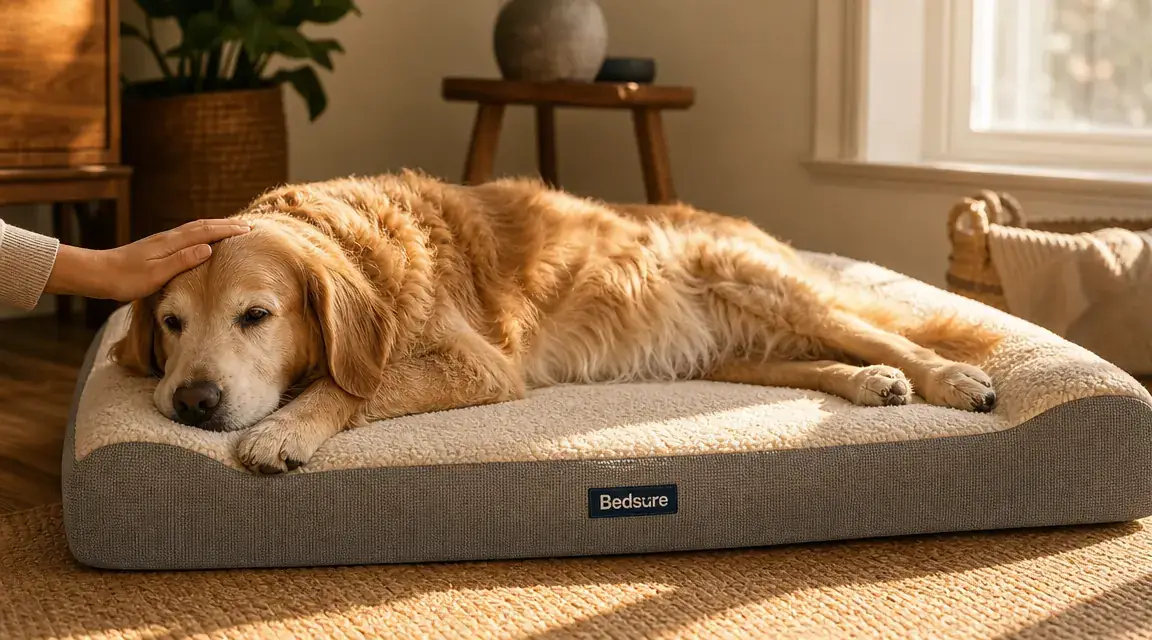
The other thing I noticed is where he chooses to sleep now. Before, I would find him on the tile in the kitchen at 5am. Tile is cool, and sometimes arthritic dogs seek out cool surfaces to reduce inflammation, but they also do it because a flat hard surface does not dig into sore hip joints the way a bad cushion can. A good foam bed removed the trade-off. He stays on the bed now instead of migrating to the floor.
Four months in, the foam has not collapsed. I have washed the cover six or seven times. The zipper still works. The corners of the foam have not started crumbling the way cheap foam does. For a dog who sleeps on it twelve hours a day, that durability matters more than almost anything else on the spec sheet.
What I'd Tell You If We Were Sitting at My Kitchen Table
If your arthritic dog is waking up at night, is reluctant to lie down, or is choosing hard floors over their bed, the bed itself is probably part of the problem. Not the whole problem. But more of it than you think. Before you add another supplement or schedule another vet visit for the sleep disruption, take a hard look at what they are actually sleeping on. Push your fist into the center of it. If it touches the floor in under two seconds, your dog is sleeping on the floor with a fabric layer on top. That is not rest, it is just warmer tile. A real memory foam base holds its shape under the weight of the animal on it. That is the difference. I would not go back to a polyfill bed for Moose, and I would tell you the same thing I tell anyone who asks: it is the simplest change with the fastest payoff I have found for keeping a senior dog more comfortable at home.
Moose is sleeping through the night. It started with the bed.
The Bedsure orthopedic dog bed is what I use and what I recommend. If you want the full breakdown on foam density, cover durability, and sizing, read my complete review before you buy.
Amazon Check Today's Price on Amazon →