
My dog Bear is a 95-pound shepherd mix who has been dealing with mild hip dysplasia since he turned seven. I have bought him four dog beds over the past three years. Two collapsed into flat pancakes within sixty days. One had foam that smelled like a chemistry lab for six weeks. The fourth, a Bedsure orthopedic memory foam bed, is still holding its shape after four months of daily use and has been through the wash eight times. The difference between that bed and the three failures was not luck. It came down to a handful of specs most product listings bury or skip entirely.
If your large-breed dog is slowing down on stairs, shifting weight off one hip, or standing up from rest with that stiff-legged morning shuffle, an orthopedic dog bed can genuinely help. But a thin layer of foam marketed as 'memory foam' will not do the job, and a bed that falls apart in the wash is just a soggy mat after a muddy winter. This guide walks through exactly what to check before you buy, so you do not repeat the same mistakes I did.
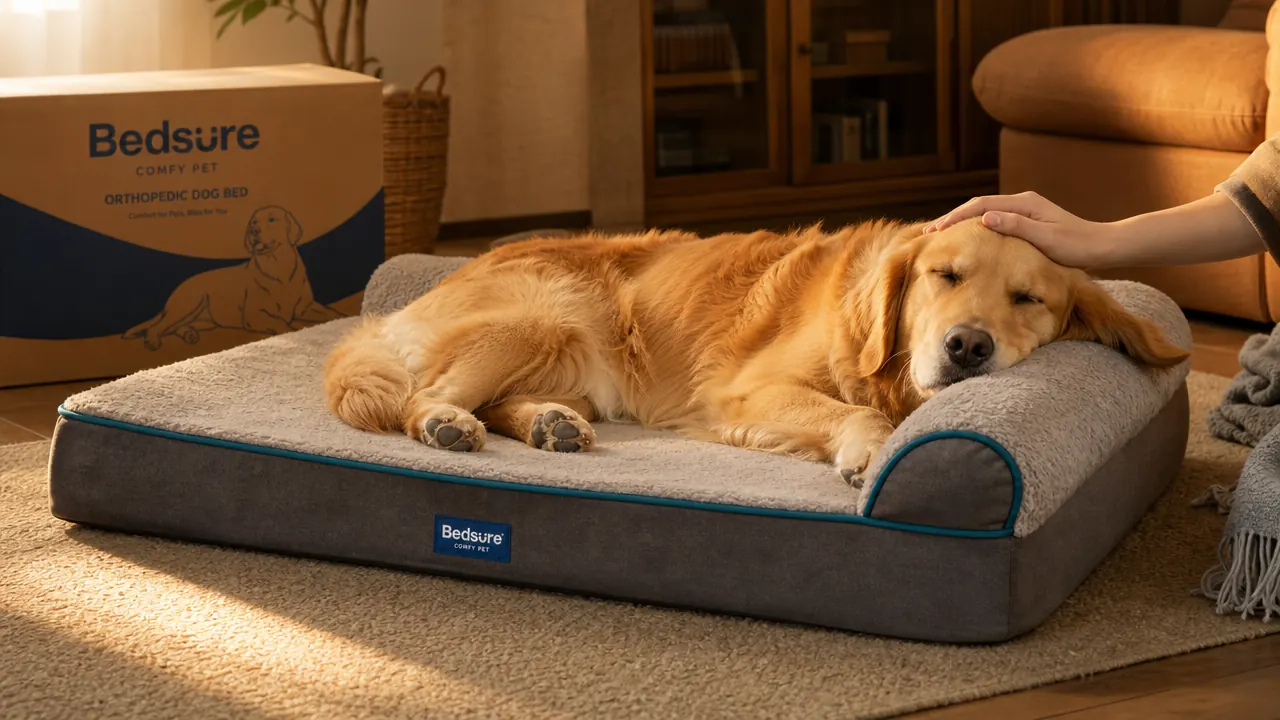
Bear sleeps through the night on this bed. Four months, eight washes, still holding shape.
The Bedsure Orthopedic Dog Bed is the one we landed on after three failed attempts. Memory foam base, waterproof liner, machine-washable cover. Over 51,000 Amazon reviews back it up.
Amazon Check Today's Price on Amazon →Step 1: Measure Your Dog in Their Natural Sleep Position, Not Their Standing Length
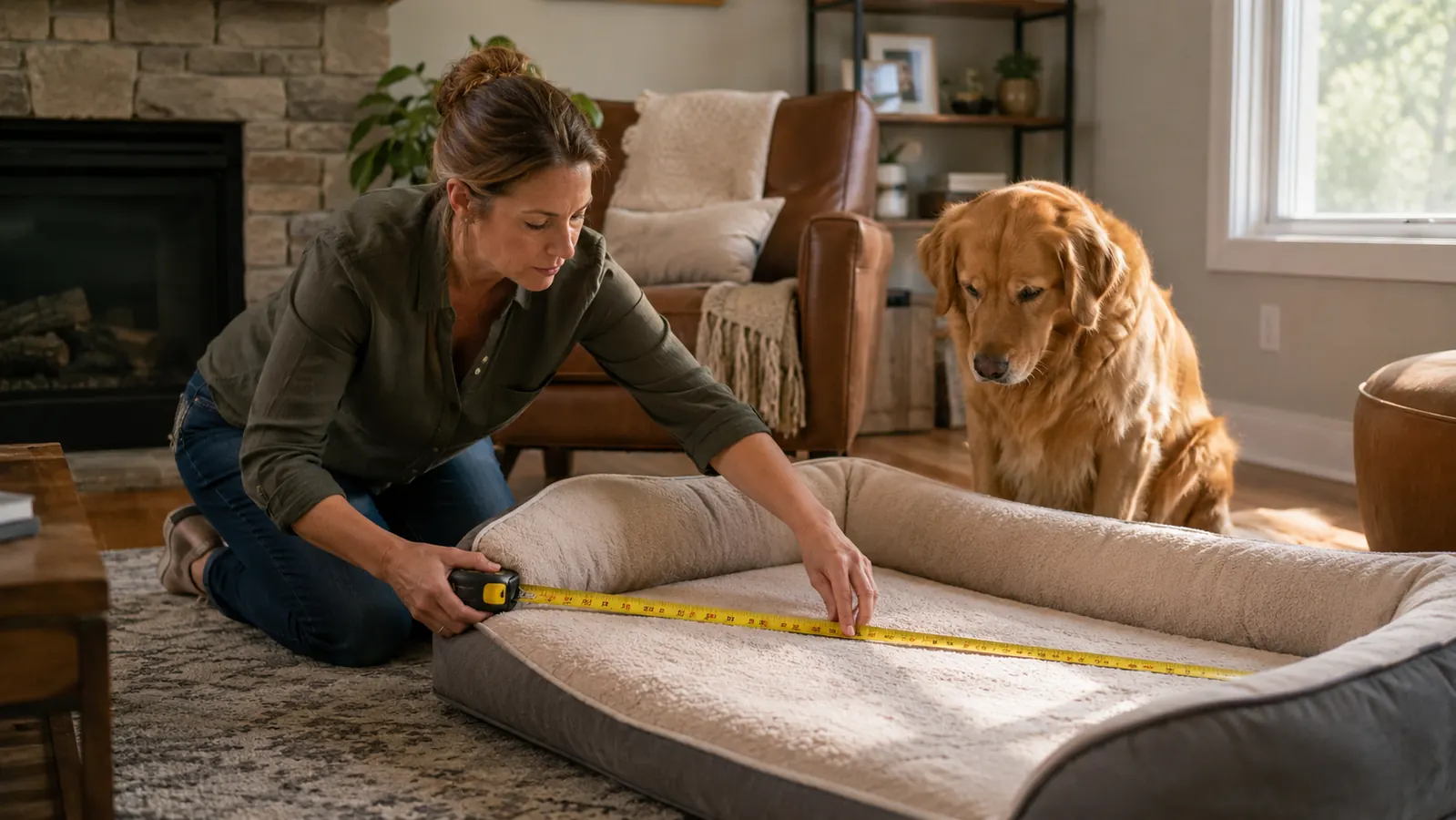
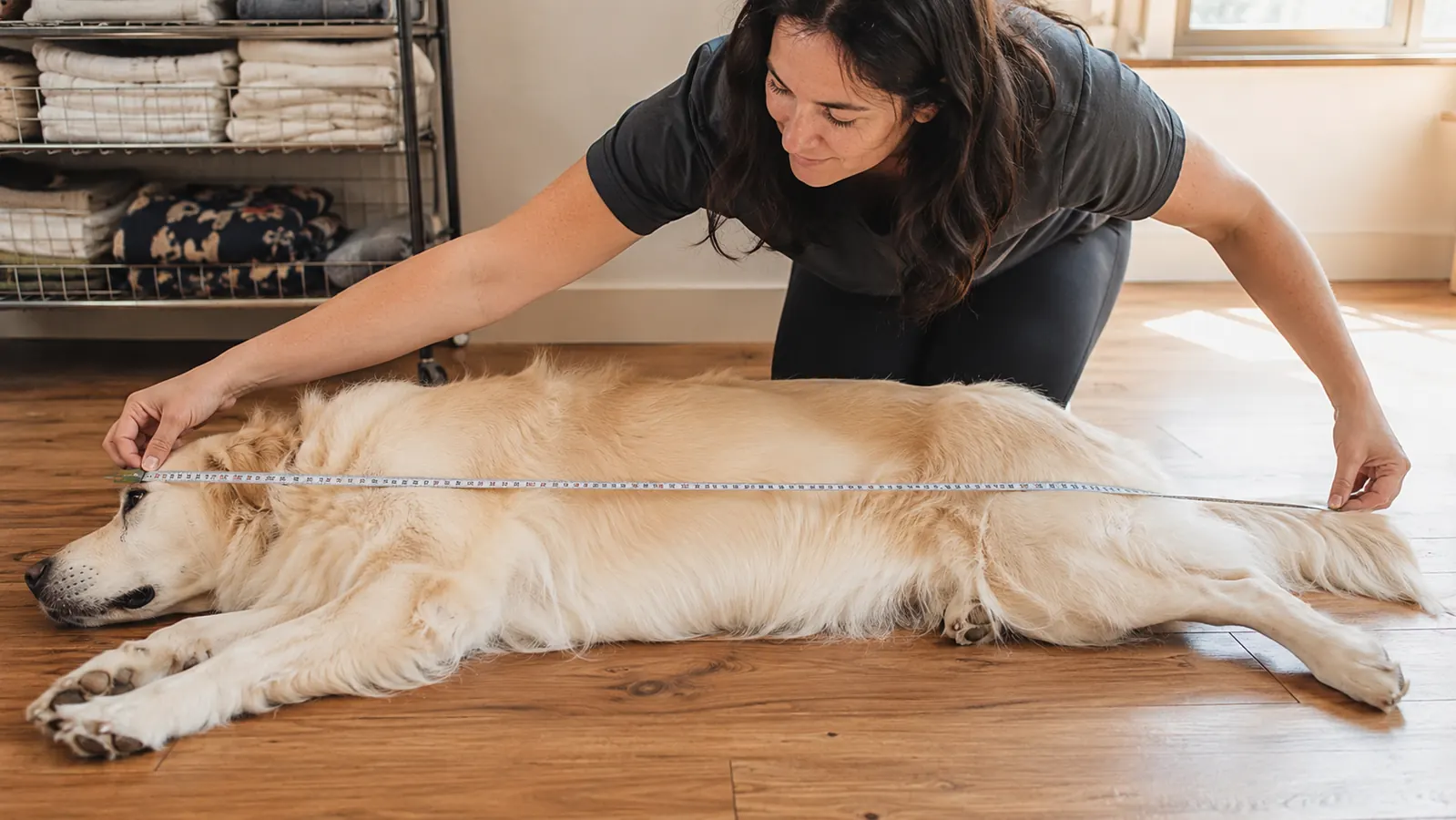
This is the mistake I made with the first bed I bought for Bear. I measured him nose to tail while he was standing and ordered a size that matched. He immediately flopped down sideways with his legs stretched out past the edge. A dog that sleeps fully extended, like most large breeds do after a big walk, needs a bed that fits their sprawl, not their standing footprint. Grab a tape measure and lay it along your dog while they are actually sleeping. Note the longest point from nose tip to the end of their back feet in a fully extended position. Add at least six inches on each side.
For Bear at 95 pounds, the right fit turned out to be a 40-by-35-inch surface. The bed I initially bought was 36 by 27 inches, which is sized as 'large' on most listings. Marketing sizes and real sizes rarely match. Look at the actual dimensions in the listing, not the label. If the listing only says 'large' without centimeters or inches in the specs, skip it.
Also check whether the listed dimensions include the bolster wall or only the flat sleeping surface. Some listings measure the outside of the bolster, which eats into the usable interior. The Bedsure bed I use is clear about this in the specs, which is one reason it made the shortlist.
Step 2: Check the Foam Type and Thickness, Not Just the 'Memory Foam' Label
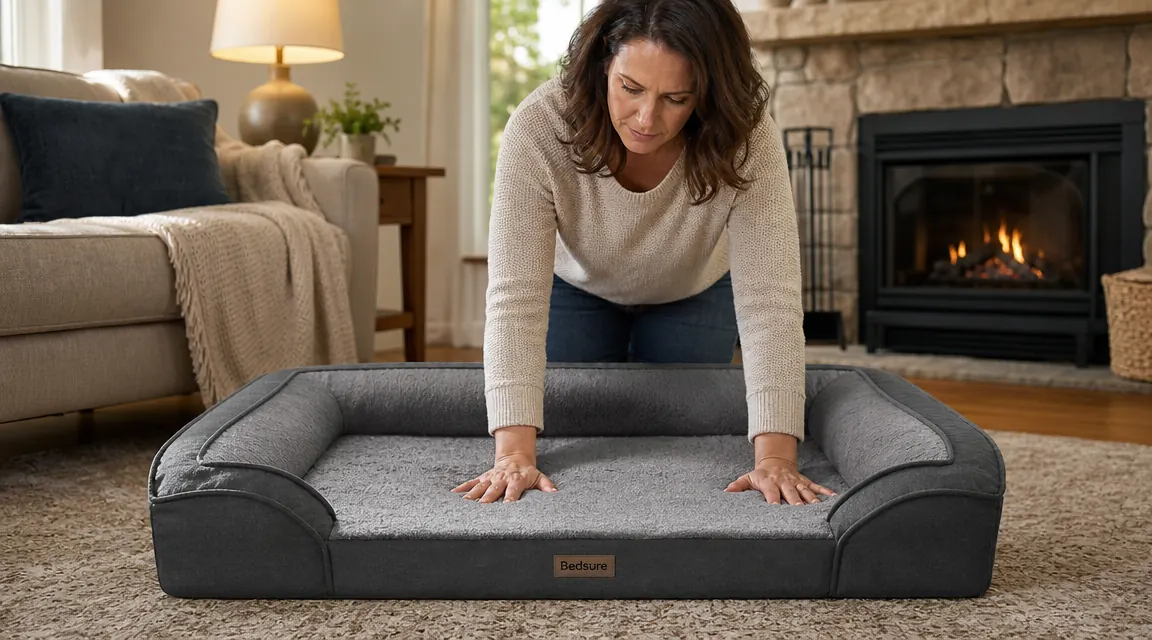
The term 'memory foam' on a dog bed listing means almost nothing by itself. A one-inch layer of memory foam over a hollow base is still 'memory foam.' For a dog over 60 pounds, you need a minimum of three inches of solid foam, and that foam needs to be dense enough not to bottom out under your dog's heaviest pressure points. The technical measure is ILD, or Indentation Load Deflection. For a large dog, look for foam rated between 25 and 35 ILD, which means it compresses slowly and springs back over several seconds rather than immediately. Very few dog bed listings publish ILD ratings, but you can test this yourself: press your fist hard into the center of the foam. If you feel the base beneath within two inches of pressure, the foam is too thin or too soft.
Some beds use shredded foam or poly-fill instead of solid foam. Shredded foam is fine for pillows but it shifts under a heavy dog, creating voids beneath the hips and shoulders. For a dog with joint issues, that shifting means pressure points form right where you are trying to relieve them. Look for beds that explicitly state 'solid memory foam base' rather than 'memory foam filling.' The Bedsure orthopedic bed uses a solid foam base layer under the outer cushioning, which is why it does not develop the lumps and valleys that shredded-fill beds show after a few weeks.
Off-gassing is a real issue with low-quality foam. Cheaper foam often uses polyurethane compounds that release a chemical smell when new. This fades over days or weeks, but some dogs refuse to sleep on a smelly bed during that window. If off-gassing is a concern, look for CertiPUR-US certified foam, which has been tested for harmful chemical emissions. The Bedsure foam carries that certification.
Step 3: Confirm the Cover Is Machine Washable and the Liner Is Waterproof
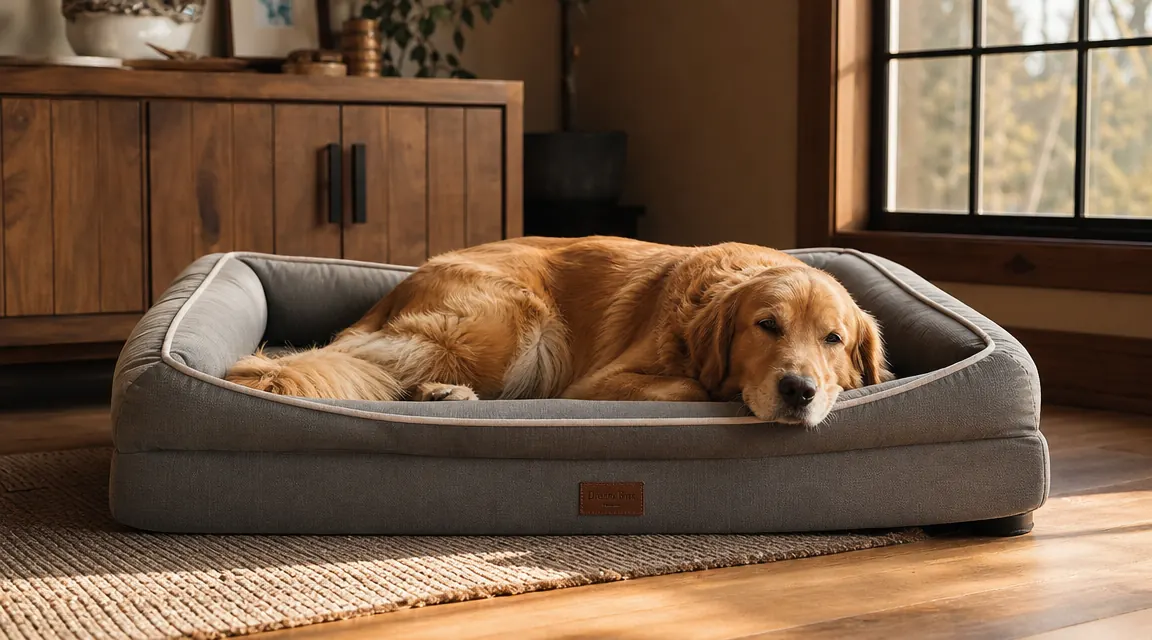
A dog bed that cannot be washed is just a bacteria incubator. For large dogs especially, you need a cover that unzips completely, survives a standard washing machine cycle, and goes back on without wrestling with it wet. Check that the cover uses a full perimeter zipper, not a partial zipper that makes removal awkward. Also check the thread count or fabric weight in the description. Thin microfiber covers pill and shred after three or four washes. Oxford weave fabric or canvas-weight material holds up far longer.
The layer under the removable cover matters just as much. Any large dog will have the occasional accident, a muddy paw that drags moisture inside, or a wet coat after a rainy walk. Without a waterproof liner between the cover and the foam, moisture soaks into the foam and you cannot get it out. Wet foam develops mildew within days. Look for listings that specifically mention a waterproof inner liner or a water-resistant foam encasement. The Bedsure bed has a waterproof liner over the foam base. It has kept Bear's two accidents from reaching the foam, which would have ended the bed's useful life immediately.
Step 4: Match the Bed Size to the Right Location in Your Home
Where your dog actually sleeps matters as much as the bed specs themselves. If you are placing the bed in a corner, a rectangular bed fits better than a round one and gives your dog the option to press against two walls, which many dogs find calming. If the bed goes in an open floor area, a round or square bed works fine. Either way, measure the floor space before you order. A 40-by-35-inch bed needs at least 44 by 39 inches of clear floor to sit flat without being crammed against furniture, since crowding the bed can cause the edges to buckle and distort the sleeping surface over time.
Consider placement relative to drafts and heat sources too. A dog with joint pain is more comfortable at a stable temperature. Cold floors conduct chill through even a thick foam base. Placing the bed away from exterior walls, air vents blowing cold air, or drafty sliding doors makes a real difference for senior dogs. This is not a spec you can check on the listing, but it is the kind of environmental detail that determines whether your dog actually uses the bed consistently.
Step 5: Check Edge Support and Whether the Bolster Design Fits Your Dog's Habits
Some dogs never use a bolster. Bear happens to be a bolster dog. He rests his chin on it and seems to find the lateral pressure against his shoulder comforting. Other dogs avoid bolsters and just want flat open space. Watch your dog sleep for a few nights before committing to a bolster or bolster-free design. If your dog consistently presses against a wall or sofa cushion while sleeping, they will probably use a bolster. If they sleep sprawled flat in open space, a flat ortho mat may serve them better.
If you choose a bolstered bed, check that the bolster is filled separately from the main foam base and can be spot-cleaned independently. Some cheap bolstered beds integrate the bolster into a single foam mold that cannot be cleaned without soaking the whole unit. Also check the base frame for non-slip backing. A 95-pound dog jumping off a bed on hardwood floors will send a bed without grippy backing across the room. This sounds minor until you watch your arthritic dog scramble to re-board a bed that has slid two feet from where it started.
Warranty and return policy deserve a quick look before you check out. Some orthopedic dog beds have a 30-day return window while others allow 90 days. Given that foam compression failure sometimes shows up only after 45 to 60 days of use, a 30-day window is tight. The Bedsure bed comes with a return window and customer support that, in my experience, has been responsive when I had a question about the waterproof liner after the second wash.
What Else Helps a Large Dog Sleep Better
An orthopedic bed addresses the surface your dog sleeps on, but joint comfort is a full-system problem. If Bear is stiff in the mornings, a good bed alone does not fully solve it. A daily joint supplement with glucosamine and chondroitin is the most common veterinary recommendation alongside supportive bedding. Keeping your dog at a healthy weight takes pressure off hip and elbow joints during sleep. Short, gentle warm-up walks in the morning help loosen stiffness before your dog settles in for the day. For dogs with diagnosed arthritis, ask your vet about non-steroidal anti-inflammatory options that can run alongside these supportive measures. The bed is part of the solution, not the whole answer. See our full breakdown of why orthopedic beds matter and our four-month review of the Bedsure bed if you want more detail before buying.
The difference between a bed that lasts and one that collapses in sixty days is almost never price. It is foam density, a waterproof liner, and a cover you can actually wash.
After three failed beds, this is the one Bear still sleeps on four months later.
The Bedsure Orthopedic Dog Bed checks every box on this list: solid memory foam base, CertiPUR-US certified foam, waterproof inner liner, machine-washable oxford cover, and non-slip bottom. Rated 4.5 stars across more than 51,000 reviews. Check current sizing and today's price on Amazon.
Amazon Check Today's Price on Amazon →