
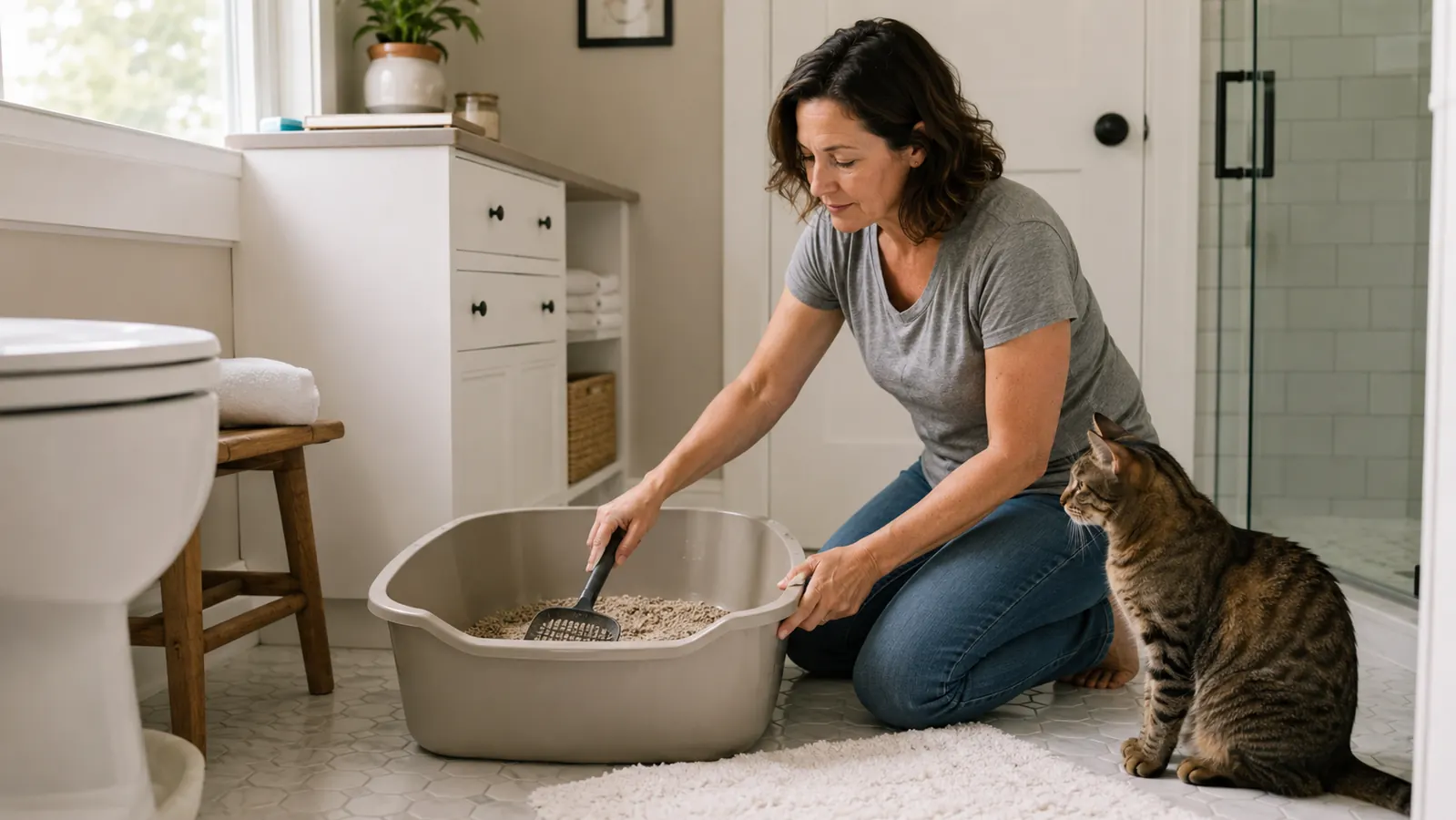
When my 10-year-old gray tabby Mochi started avoiding her covered box last spring, I made a fast decision. I ordered the Arm & Hammer Large Sifting Litter Box with Microban based on the review count alone. Over 54,000 ratings, a 4.4-star average, and it was cheaper than a bag of premium litter. I figured the crowd could not be wrong. Four months later I can tell you the crowd was mostly right, but the listing glosses over four specific things that determined whether someone keeps this tray or ships it back in the first two weeks.
This is the review I wish had existed before I bought it. I also test it alongside my second cat, a 13-pound Maine Coon mix named Fig, who is the real stress test for any litter box labeled large. If a box can handle Fig, it can handle most cats. Here is what I found.
The Quick Verdict
A legitimately useful manual sifting tray that underperforms for heavy diggers, big cats, and anyone who buys it expecting Microban to handle odor rather than just bacteria buildup.
Amazon Check Today's Price →Still scooping clumps one at a time? This tray turns that chore into a ten-second lift-and-sift.
The Arm & Hammer Sifting Litter Box with Microban has 54,000-plus ratings on Amazon and a 4.4-star average. Check today's price below before we get into the fine print.
Amazon Check Today's Price on Amazon →How I've Used It: Four Months With Two Cats at Opposite Ends of the Size Spectrum
Mochi is 10 years old, about 8 pounds, and a reasonably polite litter box user. She squats low, does a quick cover, and walks out. Fig is 13 pounds, a deliberate digger, and treats the litter box like a project. He repositions twice, digs before and after, and kicks litter with genuine force. If this tray was going to fail, Fig would expose it.
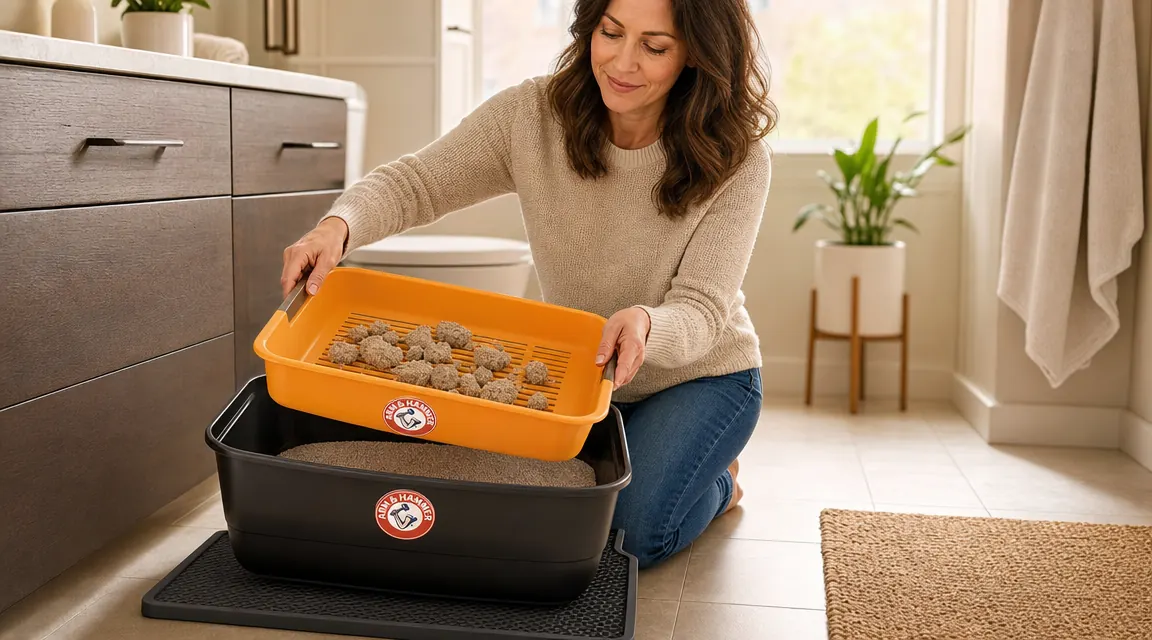
I set up the three-tray system in our main floor half bath, which has about 4 square feet of open floor space beside the toilet. The box fits. I clean it every morning before feeding them, which takes roughly 30 to 45 seconds once the rotation is automatic. I have done two full deep washes in the sink over the four months and swapped in a fresh bag of litter three times.
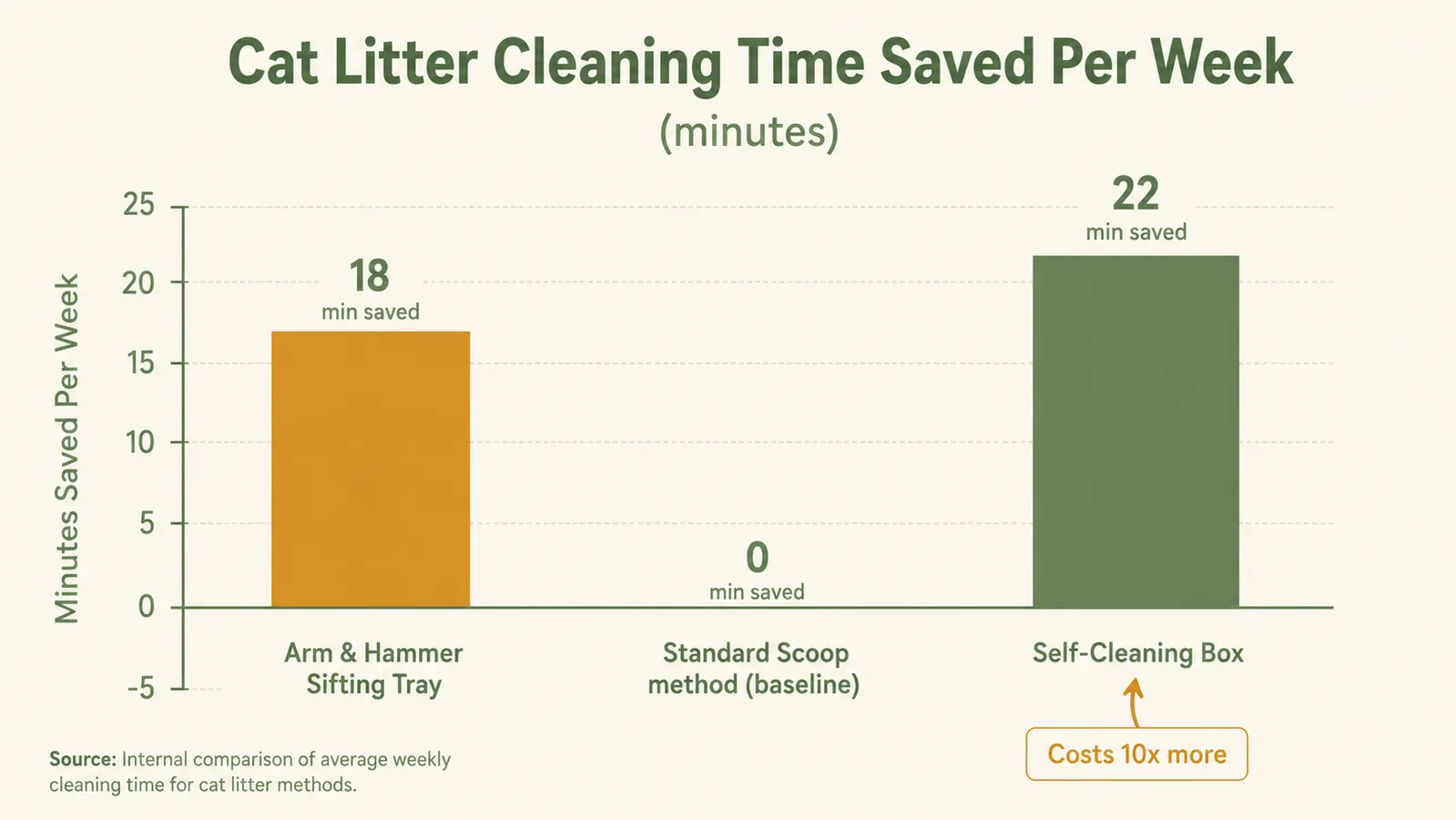
What I noticed in the first week was different from what I expected. The sifting mechanics worked. The cleaning was faster than any previous method. But by day four I had also noticed three specific problems the listing does not address clearly. I am going to walk through each one.
Thing One: The Sides Are Shorter Than They Look in the Photos
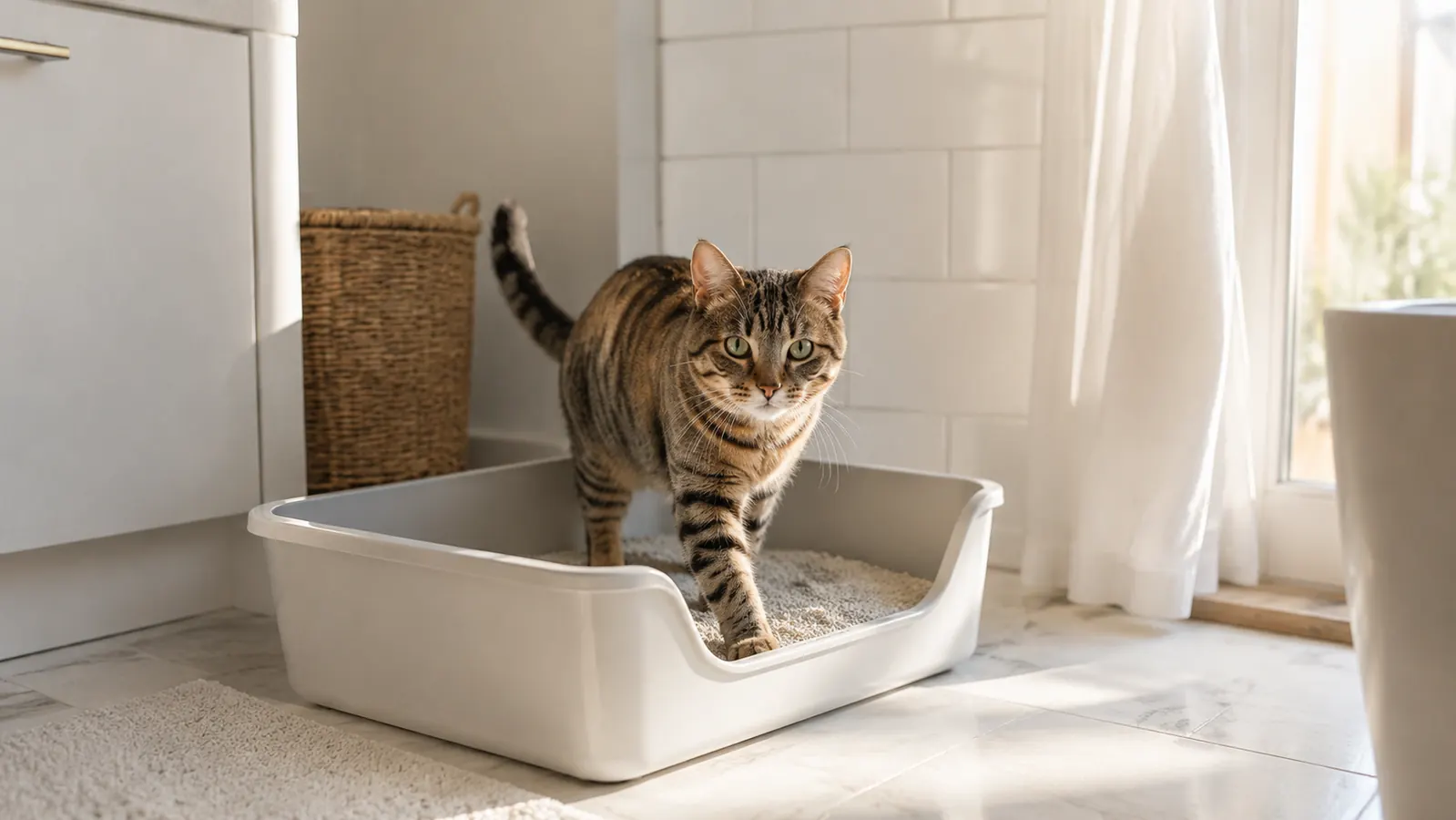
The interior wall height on this tray is approximately 4.5 to 5 inches. That sounds adequate until you watch Fig use it. His back haunches sit about level with the top edge when he is in a full squat. When he digs, the litter does not stay in the box. It arcs over the front lip onto the tile floor in a radius of about two feet. In the first week I was sweeping up after every visit.
The Amazon photos show the box from a low angle, which makes the sides look taller than they are in real life. If you have ever seen a box photographed at floor-level with a small cat inside, you have seen this same visual trick. Measure 5 inches against a ruler before you buy. That is the actual depth. For cats under 10 pounds who dig moderately, it is probably fine. For a cat like Fig, it is not enough wall.
My fix was a litter mat with a high-sided lip, placed flush against the front of the box. That mat now catches about 70 percent of what Fig kicks out. Without it, the floor tracking was a daily frustration. If you have a large or enthusiastic digger, budget for a mat as a mandatory companion purchase, not a nice-to-have.
Thing Two: Sifting Only Works With Medium-Grain Clumping Clay Litter
This is the one that generates the most one-star reviews, and it is completely avoidable if the listing explained it clearly. The holes in the perforated sifting trays are sized for standard medium-grain sodium bentonite clumping clay. When you lift the tray, loose granules fall through the holes and clumps stay on top. That is the whole mechanism.
If you use any of the following, the system will not work correctly: non-clumping clay (waste does not form held clumps, so nothing is caught by the tray), crystal silica gel litter (crystals are either too small and fall through, or too large and clog the holes), wood or paper pellets (pellets disintegrate when wet and either clog the holes or collapse through), or fine-grain clumping litter (wet clumps can be soft enough at the edges to partially pass through the holes before they fully set).
I ran a test with a lightweight clumping litter I had been curious about. The granules were noticeably smaller than my regular clay. After one use, I lifted the sifting tray and found damp half-formed clumps smearing through the holes into the tray below rather than staying on top. I cleaned up the mess and switched back to my standard medium-grain clay. The system worked perfectly again. Stick with a mainstream sodium bentonite clumping clay in a standard grain size. Do not experiment.
Thing Three: What Microban Does and Does Not Do for Odor
Microban is a real antimicrobial additive, and it does something genuinely useful. It is integrated into the polypropylene plastic during manufacturing, not applied as a surface coating. What it inhibits is bacterial colonization on the plastic surface itself. Bacteria is the primary driver of the persistent ammonia smell that builds up in a litter tray over months of use, even when you clean it regularly. The Microban protection means the plastic resists that long-term bacterial buildup, so the trays stay odor-neutral between deep washes longer than unprotected plastic.
What Microban does not do: it does not neutralize the smell of fresh waste. It does not work on airborne odor. It does not replace regular scooping or cleaning. It does not extend how long you can go between cleaning cycles. I want to be precise about this because a meaningful chunk of the negative reviews are from people who bought this tray expecting Microban to function as an odor eliminator and were disappointed when the box still smelled between cleanings. That was never what Microban was designed to do.
Microban slows bacteria colonization on the plastic. It does not neutralize fresh waste smell. If you are buying this tray expecting it to handle odor on its own, that is the wrong expectation and the listing lets you hold it.
The practical benefit of Microban that I can confirm: at the four-month mark, my trays still smell like nothing when they are clean. My previous basic litter pan had a faint but detectable ammonia smell baked into the plastic by month three, even with regular washing. That difference is real. But if I skip cleaning for three days, the box smells, Microban or not. Fresh waste odor is a ventilation and cleaning schedule problem, not a Microban problem.
Thing Four: Plastic Durability and the Warping and Cracking Complaints
The Amazon reviews have a notable cluster of complaints about trays warping, cracking at the corners, or becoming brittle after several months. I have not experienced cracking in four months, but I can see where the risk comes from. The plastic is lightweight polypropylene, which is standard for this price point. It flexes when you lift a full tray. The flex is not alarming but it is consistent, and repeated flex in the same spots over many months will eventually cause stress fractures in a plastic this thin.
My trays have not warped, but I am careful about how I wash them. I use warm water, not hot, and I do not leave the trays in direct sun to dry. Thermal cycling, meaning repeated hot-then-cold exposure, is what accelerates warping in polypropylene. If you wash these in hot water or leave them on a sunny windowsill to air dry, you are shortening their lifespan. I dry mine on a towel in the shade and have had no warping issues.
The corner cracking complaints appear most often from people who are rough with the tray when full, who drop it or torque it during the sift. Lift straight up, support from underneath with both hands, and do not twist the tray during the sifting motion. The plastic tolerates gentle repeated use. It does not tolerate being handled aggressively. That is a realistic limitation at this price point, not a defect.
Does It Actually Fit a Large Cat?
The interior floor space is approximately 18 inches by 15 inches. That is enough for Mochi to turn around comfortably with room to spare. For Fig at 13 pounds, it is workable but not generous. He can turn around, but he does not have much room to reposition during his digging ritual. His front paws occasionally land on the rim rather than inside the box when he steps in from the side.
For cats in the 14-to-18-pound range, which is where you find large Maine Coons, big Ragdolls, and heavy-set neutered males, I would call this box undersized. The listing says large, and compared to a basic 14-by-11-inch economy pan, it is large. But against the actual space a genuinely large cat needs to use a box without feeling cramped, the dimensions are borderline. If your cat is over 14 pounds, look for something with interior dimensions closer to 20 by 16 inches.
The Return Pattern: Who Ships This Back
Based on the negative review patterns, four types of buyers return this tray. First, people who expected a self-cleaning box and did not read the listing carefully enough to understand this is a fully manual system. Second, people who use crystal, pellet, or fine-grain clumping litter and find the sifting mechanism does not work with their preferred litter. Third, people with large cats who find the box dimensions cramped. Fourth, people with spray-prone cats, particularly intact or high-posting males, who find that a 5-inch wall does nothing to contain sideways spray.
If you fall into any of those four categories, this tray is not the right product for your situation and you will likely return it. That is not a quality failure. It is a fit problem, and the listing could be clearer about where the limits are. If you are outside those four categories, meaning you have an average-sized cat, you use a standard medium-grain clumping clay, and you do not mind doing a daily 30-second cleaning cycle, the tray is a genuine improvement over a basic open pan.
What I Liked
- Manual sifting takes under a minute once the rotation pattern is automatic
- Microban plastic stays odor-neutral between washes noticeably longer than unprotected trays
- No motor, no sensor, no subscription, no parts to replace
- Interior dimensions work for standard adult cats up to about 12 to 13 pounds
- Easy to break down and rinse in a sink or bathtub
- Made in the USA
Where It Falls Short
- Sides are only about 5 inches tall, insufficient for aggressive diggers or high-spray cats
- Sifting mechanism only works with medium-grain sodium bentonite clumping clay
- Lightweight plastic flexes when full and can crack at corners if handled roughly or washed in hot water
- Interior is borderline small for cats over 13 to 14 pounds
- Microban does not neutralize fresh waste odor, only slows long-term bacterial buildup on the plastic
- Litter tracking requires a mat as a companion purchase for hard floors
Who This Is For
This tray is the right buy if you have one or two cats in the 8-to-12-pound range, you already use or are willing to switch to a standard medium-grain clumping clay litter, and you want a faster daily cleaning method than scooping a basic pan. It is also a solid choice if your previous trays developed that persistent musty plastic smell after a few months. The Microban protection makes a real difference on that specific problem. The low entry price and simple three-tray design mean there is nothing complicated to break or replace.
Who Should Skip It
Skip this box if your cat weighs more than 13 pounds, digs with genuine force, or has any tendency to spray against walls. Skip it if you use crystal litter, wood pellets, paper pellets, or a lightweight clumping formula. Skip it if you want hands-off automatic cleaning. This is a manual system and it only delivers its advantages if you actually do the daily rotation. If the box sits untouched for four or five days, a basic open pan with a good scoop will serve you just as well. Check the Arm & Hammer vs IRIS USA side-by-side for a direct look at how this sifting design compares to a high-walled open box on odor and scatter. If scatter is your main complaint, that comparison will help you decide which design fits your setup. And if the underlying odor problem is more stubborn than the box can solve, the full breakdown of how to control cat litter box odor covers every factor: cleaning schedule, litter depth, box placement, and tray design together.
You now know what the listing skips. If none of the four failure modes apply to your cats, this tray earns its 4.4-star average.
The Arm & Hammer Large Sifting Litter Box with Microban is available on Amazon with over 54,000 ratings. If your cats are average-sized and you use a standard clumping clay, it is a legitimate upgrade over a basic open pan. Check today's price below.
Amazon Check Today's Price on Amazon →